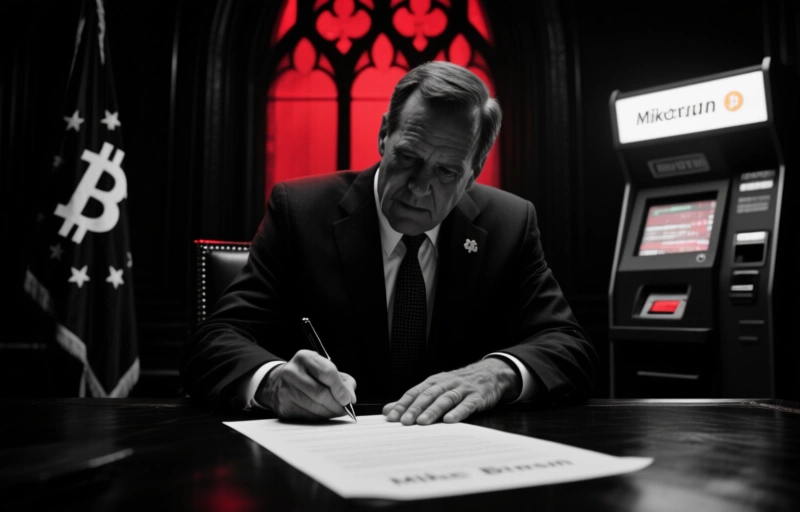
Indiana Governor Mike Braun signs a bill banning Bitcoin ATMs in the state, targeting scams and money laundering. Learn what this means for crypto traders and how to adapt.
Indiana just made a bold move that's sending ripples through the crypto world. Governor Mike Braun signed a new bill that bans the use of Bitcoin ATMs across the state. If you've been following crypto regulations, you know this is a big deal.
Let's break down what happened, why it matters, and what it could mean for crypto traders in the United States.
### The New Law in Plain English
Governor Braun's signature effectively pulls the plug on Bitcoin ATMs in Indiana. These machines let people buy or sell Bitcoin with cash, kind of like a regular ATM but for digital currency. Now, they're illegal to operate in the state.
The law targets the machines themselves, not necessarily the act of trading crypto. But it's a serious restriction that could change how people access digital assets in the region.

### Why Did Indiana Do This?
State officials are worried about scams. Bitcoin ATMs have become a favorite tool for fraudsters, who trick victims into sending cash through these machines. It's a fast, anonymous way to move money, and that makes it risky.
But there's more to it. Regulators are also concerned about money laundering and unlicensed financial activity. By banning the ATMs, Indiana is taking a hard line on consumer protection.
### What This Means for Crypto Users
If you live in Indiana or travel there, you'll need to find other ways to trade crypto. Online exchanges are still fair game, so you're not locked out entirely. But the convenience of a quick cash-to-crypto transaction at a local ATM is gone.
For professionals in the crypto space, this is a signal. States are watching, and more regulations could be coming. It's a reminder that the regulatory landscape is shifting fast.
### A Quick Look at the Broader Picture
This isn't just about Indiana. Other states are considering similar moves. The federal government is also taking a closer look at crypto ATMs. If you're trading crypto professionally, you need to stay on top of these changes.
Here are a few things to keep in mind:
- **Regulations vary by state.** What's legal in Texas might not fly in Indiana.
- **Compliance is key.** Always use licensed platforms and keep records.
- **Stay informed.** Laws can change overnight, and ignorance isn't a defense.
### What Should You Do Now?
First, don't panic. If you're using a reputable online exchange, you're probably fine. But if you relied on Bitcoin ATMs, it's time to explore alternatives.
Second, talk to a professional. A crypto-savvy accountant or lawyer can help you navigate these changes. They'll know how to keep your trading above board.
Finally, keep an eye on the news. Indiana's move might be the first of many. Being proactive is better than being caught off guard.
### The Bottom Line
Indiana's ban on Bitcoin ATMs is a wake-up call. Crypto is still a wild west in many ways, but the sheriffs are starting to ride into town. For professionals, this means adapting to a more regulated environment.
It's not the end of the world. It's just a new chapter. And if you're smart about it, you'll come out ahead.
> "This is a clear sign that states are taking crypto regulation seriously. Ignoring it could cost you." — Dr. Anja Schmidt